Thursday, 9 February 2012

Anime REVIEW: Strike Witches


Moe girls, magic and fighter planes collide in a battle for the planet against alien lifeforms in Strike Witches! After starting out as a short preview OVA in early 2007, Strike Witches went on to have a 12-episode series in 2008 and then a sequel series in 2010, also comprised of 12-episodes. This review will look at both seasons of the anime.

Strike Witches is set on an alternate Earth during the midst of World War 2. Only here the enemies aren't Nazis, instead it is the Neuroi - an alien lifeform which began their widespread invasion of Earth in the year 1939. Unable to battle the threat of the Neuroi alone, the army employs witches (or magical girls if you'd prefer) to fight for the planet. When using their magic powers, each girl grows and pair of animal ears and a tail (why exactly is never explained) and fights in aerial combat via the use of a striker unit - plane-like machines which attach to the legs and amplify strength, speed and magic power.

After noticing her magical ability, Major Mio Sakamoto offers Yoshika Miyafuji the chance to join the aerial infantry dedicated to battling the Neuroi. Despite initially refusing her offer, Yoshika receives a letter from her presumed dead father, in which he is seen with a striker unit and a young Mio. Wishing to protect people, Yoshika accepts her offer and joins the 501st Joint Fighter Wing, or the Strike Witches. Along with the Major and Yoshika taking up the rank of Sargent, the rest of the Strike Witches are;
  • Lieutenant Colonel Minna-Dietlinde Wilcke - commanding officer
  • Captain Gertrud (Trude) Barkhorn - quiet, but efficient
  • First Lieutenant Erica Hatmann - Lazy, but Karlsland's 200 victory 'ultra ace'
  • Captain Charlotte (Shirley) E. Yeager - Speed demon and thrill seeker
  • Ensign Francesca Lucchini - The hyperactive youngest member of the group
  • First Lieutenant Sanya V. Litvyak - The quiet, nocturnal radar
  • First Lietenant Eila Ilmatar Juutilainen - A girl with the power to see the future
  • First Lieutenant Perrine Closterman - Initial rival to Yoshika with an unhealthy attachment to the Major
  • Master Sergeant Lynette Bishop - The Witches' sniper and closest to Yoshika

    Our protagonists.

    Together the unit battle the Neuroi and eventually liberate Britannia, leading to their disbandment. But six months later, Venesia is attacked by an even stronger Neuroi threat and the Witches are called into action once again.
      The nations from which the main characters hail are also based on major world powers of the time, but with different names and altered territories. Japan is known as Fuso Empire, the United States of America is the United States of Liberion, Germany is Imperial Karlsland, France is Gallia, Great Britain is the Commonwealth of Britannia, Austria is Ostmark, the Soviet Union is the Orussia Empire, modern Italy is split between the Duchies of Romagna and Venezia, Finland is Suomus, Norway and Sweden are Baltland, New Germany (Argentina) is Neue Karlsland in South Liberion, and Spain Hispania. The show also makes several references to tactics and machinery used in WW2.

      Yoshika Miyafuji - alien ass kicker.

      The first season offers a lot of promise, but doesn't quite answer a lot of the series' more interesting questions. Who or what the Neuroi are is never properly explored, and instead the audience is just expected to accept that they're here and they're dangerous. However the human characters receive excellent characterisation, if a little unbalanced (this is fixed in the second season however). Each character have their own distinctive personalities and tend to pair off in the show, but they all play off each other nicely and are more like a family than a fighter unit. There are a few duds when it comes to the one-shot stories, but all help to build up the relationship between the extensive main cast. The aerial battles are superb, fast-paced and give an excellent feel of hot-shot pilots on the battlefield. It certainly saves the best for last, with the final aerial battle blowing the rest out of the sky!

      The second season saw production of the show move from Gonzo to AIC Spirits, but this doesn't really affect the art quality of the show other than a more gratuitous use of CGI for the ships (and sometimes the witches mid-flight). After what seemed like a good closing note in the first season, the reformation of the Strike Witches does come across as a little abrupt. On the whole the plot is weaker than its predecessor, with more focus going on one-shot character-centric episodes rather than the overarching story, which only really has a dominant presence in the first and last few episodes. However the other plot line, concerning Mio and how she is gradually losing her powers, is much better and adds a lot more to her character, only cementing her as my firm favourite in the show.

      The fanservice in its tamest form.

      Saving one of the key factors until last, its time to talk about the fanservice. As you've probably guessed from images, Strike Witches is a show with incredible levels of fanservice. Right from the get-go its apparent that trousers are alien to the witches, essentially making the show one giant panty shot. Although one could assume this allows the characters easier access to their striker units (and I'm sure there is an official explanation somewhere), this issue is never addressed in the show and so characters go about their day to day business in their underwear without batting an eyelid. There are also obligatory beach episodes in each season, and both also have an episode dedicated to the characters wearing their underwear as little as possible. Bath scenes are aplenty (with breasts galore in the uncut versions), with some of the characters showing off a perverted streak (Yoshika and Lucchini) resulting in plenty of groping. Strike Witches has a plot without it, but it's fair to share the show was made with presenting as much opportunity for fanservice as it humanly possible.

      Relevant.

      Your enjoyment of Strike Witches will mostly depend on the levels of tolerance you have for fanservice. If fanservice is what you look for in a show, you will LOVE this. If you can tolerate it, then there's some great character building in the show behind a decent plot which, while could have done with a little more fleshing out, is an interesting spin on the events of WW2. If you hate fanservice, you'll hate this show. Strike Witches isn't a flawless series by any means, but it's much better than most people will give it credit for. With a feature film due for release later this year, I personally am looking forward to more aerial adventures from the 501st Joint Fighter Wing, trousers or no trousers.

      Wednesday, 8 February 2012

      Toybox REVIEW: Doctor Who Classics Emperor Dalek Davros & Destroyed Imperial Dalek 2-pack


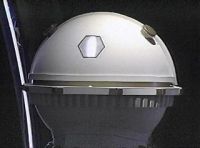
      While last year saw the release of the excellent "Remembrance of the Daleks" box set, it was missing one key element. There were also box set releases for the rest of the stories Davros, the Daleks' creator, appeared in - from Genesis all the way to Revelation. These four sets all had a Davros figure included, so the following figure was the next logical step. The third 'Remembrance' figure pack (after the 7th Doctor/Dalek 2-pack and the aforementioned box set) finally sees Davros released in his guise as the Imperial Emperor Dalek. But he is not packaged alone, and is included with the destroyed Imperial Dalek that appeared in part 3 of the story. This set is a Forbidden Planet exclusive in the UK.


      The Emperor Dalek dome is nicely detailed, however the visor hexagon is a clear plastic window rather than an accurate viewing screen. I found this particularly disappointing, since one aspect I liked about the emperor design was the eye screen with moving line (as pictured here). Not only does this window make the figure look like the screen has been deactivated, but in certain light it is also possible to see Davros peeping inside the casing. The front section of the dome can be lifted to reveal Davros...or what's left of him anyway. The headsculpting detail is excellent, capturing the mask Terry Molloy used in 1988 nicely, but the body section isn't quite as impressive. The detail on the wiring that covers Davros is a sloppy collection of paint apps, most not covering the actual moulding. Davros has zero points of articulation, not even a neck joint.


      One minor complaint is that mine suffers from a few paint scuffs, such as splashes of gold paint on the skirt and a black mark on the back of the dome (both of which are particularly noticeable on the ivory colouring). Of course, this may just be a one off incident and could vary between sets.


      While the Dalek mutant has an articulated claw (complete with metal prosthetic details as mentioned in the series) but arguably some artistic liberty has been taken on the sculpt. While the mutant itself is never fully revealed in the episode, the figure has a mutant more akin to the ones seen in the modern series, complete with brain detailing and single eye. Regardless, the mutant is nicely detailed, as the ooze surrounding it and the charred Dalek mid-section.


      How good this set is depends on a variety of factors. The 2-pack costs a grand total of £29.99, so equally divided the figures cost around £15 each. This is an awful lot when you consider that a) the previous Dalek packs were £35 each, and included FOUR figures, b) both figures have very limited motion and c) in some cases the accuracy/quality may be less than stellar. Dalek/Davros fans will certainly be happy by the release, but I can't help feel that I would have preferred a cheaper single Davros release...but unfortunately it seems Character Options doesn't work in single packs any more. Still, it's great to finally have all the versions of Davros released and at last an emperor Dalek, fingers crossed that Character are at work on an 'Evil of the Daleks' emperor and then maybe one day a TV21 comics Emperor....

      ...okay that will probably never happen. But let a man dream.

      Tuesday, 7 February 2012

      Toybox REVIEW: Bandai Super Robot Chogokin Dekaranger Robo


      I'm a little late to the party on this one, but better late than never. Today's review is of the third Super Sentai mecha to be entered into the Super Robot Chogokin line (following on from ShinkenOh and GokaiOh). Dekaranger Robo hails from the 28th Super Sentai series Tokusou Sentai Dekaranger and will also be known to Power Rangers S.P.D. fans as the Delta Squad Megazord.

      Like the other SRC Sentai mecha, this cannot be split into its component parts, instead trading that and size for superior articulation. And that it has - Dekaranger Robo has a full range of motion in its head, shoulders, arms, hands, waist, legs and feet. The sculpt is excellent, with the standard inclusion of diecast in the legs to give the figure a little weight. Dekaranger Robo is a predominantly white mecha so the toy has some nice uniformity, but still retains the multicoloured aspect that makes the Sentai mecha so appealing. There are also a few extra gimmicks implemented, including is an opening panel on the figure's right leg (the Patrailer), just like the compartment the Signal cannon comes from in the show. Another is a hinged shield piece on the left arm (the Patsigner), meaning it can also replicate the "judgement" pose (albeit without innocent and guilty symbols).

      There are plenty of accessories included to appease both Dekaranger and general mecha fans alike. We have Dekaranger Robo's two signature weapons - the Judgement sword and Signal Cannon, along with the gyro wappa, judgement sword hilt (which can be attached to the right arm as additional cannons), seven additional hands, one of which is a brilliant 'thumbs up' hand and a blasting effect part for the signal cannon. Early runs of the figure also come with separately packaged "boost effect" parts, which are giant spiky pieces of translucent plastic that are a bit confusing to display properly. They aren't character specific though, so could feasibly used with any figure, even ones from different toy lines.

      In addition to what I've already listed, SRC Dekaranger Robo also includes some additional parts meant for GokaiOh. In order to transform your SRC GokaiOh into DekaGokaiOh, a Patstriker patrol car along with machine gun pieces are packaged within the tray (not as a first wave exclusive). Since I don't own GokaiOh there aren't any pictures included in this review, but if you're interested in seeing the figure a picture can be seen here.

      I was a bit disappointed by ShinkenOh for his price, but with Dekaranger Robo its like Bandai went and fixed all those flaws. A hefty figure with plenty of details, hidden features and a great range of accessories for both himself and GokaiOh, with SRC Dekaranger Robo you're getting far more bang for your buck and enough to forget about the fact the figure lacks the combining gimmick of the larger DX version. If this is the quality of the SRC Sentai mecha to come, bring on Magiking.


      Saturday, 4 February 2012

      Custom Figure: Dalek Zeg


      This is a custom I've wanted to do for god knows how long, but the fact classic 1964 Daleks don't come cheap on eBay hasn't sped the process along. Anyway I finally managed to get one for a reasonable price and have created what was not only one of (if not the) first red Daleks in Dalek history, but also the first Dalek ever to have a given name. I present to you...Zeg the invincible!

      In the TV21 comic strip he originated from, Zeg was a Dalek inventor who conducted experiments to strengthen the Daleks' Dalekanium casing. After a lab accident he went through a transformation that made him almost invincible. He named his new red casing 'Metalert'.


      Believing he should rule the Daleks, Zeg challenged the Emperor for supremacy. Untouched by even the black Dalek (the emperor's second in command) it was decided that both the emperor and Zeg should duel to the death. In an intense battle through the landscapes of Skaro, Zeg withstood attacks from both acid and mercury. He was eventually killed when the emperor froze him with liquid oxygen, the extreme cold freezing Zeg and then crushing him upon contact with heat.


      This custom was done using a Character Options classic 1964 Dalek as a base, and then using Humbrol red enamel paint and Revell gold enamel. I am extremely pleased with the outcome, as its the most extensive repainting I've ever done to a Dalek. The downside is I now really want to get a few more classic Daleks to make some TV21 drones, and that won't come cheap!


      Thursday, 2 February 2012

      Series REVIEW: Power Rangers Mystic Force


      Power Rangers Mystic Force is the 14th season in the Power Rangers franchise, adapted from the series Mahou Sentai Magiranger and following on from Power Rangers S.P.D. The season ran for 32 episodes during 2006.

      Twenty years ago, a parallel dimension where magic flourishes was attacked by the forces of darkness. An army of the monsters, led by the powerful Morticon, swarmed the land with the intention of taking over the magical dimension and our own. The Mystics battled valiantly against overwhelming odds until they drove the evil back from the edge of the human world. The strongest wizard of all, Leanbow, cast a spell and sent the evil warriors into the Underworld, having the Gatekeeper seal the gates for all eternity. Or so they thought...

      In present day, the city of Briarwood is struck by an earthquake which cracks the seal holding the darkness underground. The sorceress Udonna, seeks out the warriors of legend - five teens living in Briarwood, to become Power Rangers alongside her. When she loses her Mystic Force ranger powers the evil but honourable Koragg the Knight Wolf, it is up to Nick, Chip, Madison, Vida, and Xander to save the Earth on their own.

      Eventually they are joined by legendary knight Daggeron (the Solaris Knight) and his genie cat Jenji. But who is the mysterious Koragg? And when connects him with both Udonna and Nick?

      There is an excellent team dynamic in Mystic Force but I felt when viewed separately none of the characters have anything particularly outstanding to offer Nick takes a while to come into his own but is an archetype red ranger through and through. Xander initially started out as my favourite member of the team but his focus episodes only served to quash any like for him, and Chip got a few laughs from me but is very much the average member of the team. Sisters Vida (or V) and Madison (Maddie) are more or less the opposites of each other. V is rather tomboyish and makes for a slightly different take on the pink ranger (she hates the colour, but accepts it more as the show goes on) and Maddie, while more compassionate, is rather dull. As the series progresses the focus becomes heavier and heavier on Nick, and individual characterisation and the team element do suffer a little from it.

      Mystic Force also has a huge range of side characters on offer, and that is both a good and bad thing. Along with Udonna there is also record store owner Toby, sorceress-in-training Clare, the comedic but wise troblin Phineas, and finally Necrolai's daughter Leelee. While all the characters do eventually play an important part in the story and come together nicely at the very end of the series, for the most part their main use is for comic relief. Toby's inclusion adds a nice bit of real-world element to the series but his scenes are completely unnecessary, and I spent the first few episodes of Leelee's introduction wondering who on Earth she was (not that she was Necrolai's daughter as that was a plot twist, more the fact she came out of nowhere). Clare starts off as the worst 'comic' character as them all but gradually builds something far better and Phineas feels like the Piggy-esque character of the show, but wholly good. Speaking of Piggy from S.P.D, he makes a nice little cameo in one of the episodes to make up for the lack of a team-up in the season.

      There are a lot of villains on show in Mystic Force, and while the quality of them is far from lacking sadly there isn't really enough episodes to do them justice. Morticon doesn't really do anything at all and is swiftly replaced by Imperious, who is probably the best villain in the season and a great "hero turned true evil" character. Finally there are the Ten Terrors, who are the main antagonists for the final portion of the show. But with only 9 episodes left when they are introduced some of them do fall a little short in the characterisation department. Thankfully, Koragg the Knight Wolf proves to be an excellent villain all the way through. His code of honour and later revelation and redemption make him possibly the most notable character of the show, and his story culminates nicely in a battle between him and his good self, the Wolf Warrior.

      Like its Sentai counterpart, the zords in Mystic Force are not robots, but transformed versions of the rangers themselves. The Mystic titans display in interesting variety in zord size, and come complete with two interesting and unique combinations (the Mystic Dragon and Titan Megazord). Solaris Knight's Solar Streak Megazord is more the usual fare for Power Rangers, but is still impressive. The second mecha (the Manticore megazord) is made up from the Mystic Firebird (formed by the red ranger) and the Mystic Lion (formed by the other four). Its transformation sequence is impressive, but it isn't really a patch on the Titan Megazord. Finally Koragg has his own megazord formation, which is also replicated by Nick on a few instances. Nick also does it with a unicorn zord, but that comes completely out of nowhere and is only used once.

      Finally we come to the aesthetics of Mystic Force. The series is notable for being the only Power Rangers series (thus far) where the rangers have had capes, and the suits look good in both regular and the powered-up legend modes. Mystic Force also boasts one of the best battlizers in Power Rangers, created by combining the red ranger with Fire Heart the dragon. Not only is the battlizer very fitting with the Mystic Force aesthetic, but it's importance is something that's carried through the majority of the show rather than appearing as a power-up in a one-shot episode.

      To begin with the series does lay the magic clichés on a little heavy. Places have names like Briarwood and Rootcore (the rangers base of operations inside a tree) and there's everything from magic wands and brooms to goblins and medieval villages. It does seem like Disney tried a little too hard to say "THIS IS A MAGIC DIMENSION" but it does help display the stark difference between the two dimensions. It's a very difference aesthetic for Power Rangers (a LOT of woodland battles), but one I feel it ultimately benefits from.

      As a huge fan of Magiranger I went into Mystic Force expecting the worst given its reputation, but I was pleasantly surprised. Yes the series has some obvious flaws, is a bit short and tries too hard in some areas, but it's still particularly enjoyable and makes some very nice additions to the established Sentai plotline. While it may not be the best of the Disney seasons, it's far from the worst. From what I've seen, I'd consider Mystic Force the most underrated PR season and definitely deserves some love once in a while.


      Monday, 23 January 2012

      Anime REVIEW: Invincible Superman Zambot 3


      As the creator of the Mobile Suit Gundam franchise, Yoshiyuki Tomino is a name that is synonymous with both the mecha genre and anime as a whole. But before Tomino created Gundam, in 1977 he created a 23 episode series named 'Invincible Superman Zambot 3'. While this show may not be anywhere near as famous as his other works, it undeniably had an influence on them and also other shows of the genre that followed.

      On the face of things the plot seems fairly generic for a 70s super robot show - the space aliens Gaizok are invading the Earth, their leader (the awesomely) named Killer the Butcher. In the past the Gaizok destroyed the planet Beal, with the survivors fleeing to Earth. In the present day, there are three related families that are descendants of the Beals, who defend the Earth using technology passed onto them by their ancestors. In order to battle the Gaizok Mecha Boosts, 12 year old Kappei Jin and his 2 cousins pilot three weapons that can combine into the titular mecha Zambot 3.

      The twist in the story is that instead of being hailed as heroes, the Jin family are condemned by the people of Earth, who blame them for the Gaizok's arrival and the death and destruction that followed. Anyone expecting Zambot 3 to be a light hearted Super Robot show with few real consequences will be in for a surprise - the world is left in ruins, people die left right and centre and climactic final battle is particularly brutal.

      The Zambot 3 mecha is made up of three components - Kappei's Zambird (which can transform into its own robot mode, the Zambo Ace), male cousin Uchūta Kamie's Zambull and female cousin Keiko Kamikita's Zambase. The combined form is not an awful design by any stretch of the imagination, but its not a particularly memorable one, and could easily get lost among the many other red, blue and white mecha that had their own series at the time. Piloting-wise I was disappointed to find that control of the mecha pretty much always solely relied on Kappei, with the two cousins doing very little from what I could tell (Keiko's cockpit was in the robot's crotch).

      While having young pilots certainly adds more gravity to the "WAR IS BAD" tone of the series, it makes the protagonists rather unlikeable. Kappei spends most of the show as an annoying brat, and the same goes for his rival, local gang leader Shingo Kōzuki. Kōzuki is the character that in some ways spearheads the animosity toward the Jin family, but when watching I found it hard to accept his point of view when he was just as stubborn about issues as Kappei. It is only after the two come to blows on several occasions that they begin to see each other's way of thinking and thus become more bearable as characters. But as far as the plot is concerned, the show never lets you forget that these are children who have been thrust into a war zone.

      But Zambot 3's biggest weakness is without a doubt its villains. Other than managing to churn out a new monster every episode, the Gaizok never come across as a particularly huge threat. Killer the Butcher in no way lives up to his name, and spends 99.9% of his scenes as nothing more than one big joke. From singing in the bath and holding his own personal rock concert to trying on jewellery and perfume, NOTHING about this character screams 'threatening'. Even when the Gaizok move away from their tactic of throwing out a different monster every week to something far more deadly, Butcher and his lackies remain a comedy joke that feel completely out of place in the show.

      Another smaller complaint is that, the fact it's obviously dated aside, the animation is particularly inconsistent. It's the usual fare of changing backdrops/colours and badly animated mouths, but that doesn't make it more easy on the eyes to watch, especially when there were shows around this time that were better animated.

      Zambot 3 isn't a brilliant show, the combination of a brutal, gritty plot and a monster of the week format don't gel together well and the result is something that doesn't live up to the full potential of either style. It is however a very interesting watch, its themes certainly original at the time and still holding up particularly well today. If you're a fan of the mecha/super robot genre and don't mind a bit of dated animation, it may be in your best interests to check this show out.

      Sunday, 15 January 2012

      Series REVIEW: Hyakujuu Sentai Gaoranger


      Back in 2001 the Super Sentai franchise celebrated its 25th anniversary with the 51-episode series Hyakujuu (Hundred Beast) Sentai Gaoranger, following on from the previous year's Mirai Sentai Timeranger. One thousand years ago, a war raged between the human race and the demonic Org Tribe. With the help of the Power Animals, the ancient Gao Warriors were able to defeat the Orgs and seal them away. Then, in present day (or 2001) the Orgs reawaken and five individuals are chosen by the Power Animals to become Gaorangers. But to do so they must give up their names and ordinary lives, living on an island in the sky and referring to each other by colour rather than name. Midway through the series they encounter Rouki, a wolf Org sealed for a thousand years who is actually possessing the body of Tsukumaro Ohgami, an ancient Gao Warrior who used the evil dark wolf mask to gain strength to defeat the Orgs, but became cursed by it in the process. After breaking the curse, he joins the team as the sixth Gaoranger, Gao Silver.

      While none of Gaoranger's protagonists are outright bad, none of them really stood out from the other or from any other Sentai hero. Red (Kakeru Shishi) is initially hot headed but gradually falls in his role of leader, while Yellow (Gaku Washio) is more aloof but becomes accepting of Red's leadership. Blue (Kai Samezu) and Black (Sotaro Ushigome) spend most of their time as some sort of comedy double act, and White (Sae Taiga) is actually one of the more competant female fighters I've seen. Silver has a lot of focus during and after the Rouki arc, but after its said and done he sort of just slots into the background without anything making him truly stand out other than that he's from the past. But my biggest problem was that while referring to them by colour helps emphasise the lives they've given up in order to become Gaorangers, I can't deny that it made me feel a little less attached to them. I've only watched the series once, and without looking them up I can't honestly remember ANY of their real names.

      The suit aesthetic was great, the gold sashes complimenting the suit colours well and striking helmet designs. The retractable claws on the gloves were an excellent touch for the "wild" look, and were not only used for extra effect but also as weaponry (particularly by GaoWhite). Alone the weapons weren't much to look at (White had a baton, and Red had some glove things that could also strangely turn into a gun) but together they were a little better.

      The series technically has no 'main' antagonist, instead the role of lead villain is split among different Highness Orgs in multiple story arcs. The first is the Shuta arc, which is followed by the lengthy Ura arc (although this has the Rouki arc sandwiched inside it), followed by the Rasetsu arc and finally a short final arc involving all three generals and the combination of them - Senki, the King of all Orgs. For me, this is where the series really fell short, as none of the Highness Orgs are particularly good. Shuta doesn't really achieve anything of great note, which Ura (who in fairness does probably achieve the most out the three) is overshadowed by the much more interesting Rouki. Rasetsu however is one of the worst villains I've ever seen, being primarily occupied with eating (he even captures Tetom JUST so she can cook for him). Not only that, but none of them look that good either - while they have a different aesthetic from the standard Orgs (body parts instead of technology - Shuta is eyes, Ura nose and Rasetsu mouths) they would still look little more than monsters of the week in any other series. Senki has a much better "big bad" feel about him, but his arrival (coupled with the rather anticlimactic and dull final episode) are a little too late.

      Tsuetsue and Yabaiba, duke Orgs and the series lackies, are quite well rounded at the start, posing a competent threat to the Gaorangers and sharing rivalries with GaoWhite and GaoYellow respectively. Mid-way into the series they tend to delve more into comic-relief territory, but once again become more interesting as Tsuetsue is betrayed by her masters.

      Gaoranger displays an excellent array of mecha, boasting one of the largest amount in Super Sentai. There are a total of four main mecha (GaoKing, GaoMuscle, GaoIcarus and Silver's GaoHunter) and then a variety of special versions (such as GaoCentaurus and GaoGod) and limb changes. These limb changes had very uninspired names, such as 'GaoKing Another Arm' but added a little bit more variety to the mecha fights, which can always potentially become a bit dry over the course of 50 odd episodes. One combination I wasn't too fond of however was the Striker formation (using GaoMadillo and GaoRhinos as the legs), because the finisher involved kicking the armadillo like a football, complete with mecha doing football tricks in a shoddy CGI stadium. In an animal-themed series, not only did it look horrible, but it also felt completely out of place.

      Which neatly brings me on to my final two complaints about the Gaoranger aesthetic. The first being their mode of transformation, which was a mobile phone (a feature that would go on to recur repeatedly in Super Sentai). Not necessarily a bad thing, but a little odd given the series is so focused on natural wild animals and has a rather clear environmental message. Finally would be GaoSilver's finisher, which involved him playing pool with his animal jewels. It's certainly different, but that didn't change the fact I thought it still looked stupid.

      As this was an anniversary series, Gaoranger also included the first "Vs. Super Sentai" movie (which would return for the 30th anniversary/Boukenger and under a slightly different name for the 35th/Gokaiger). While the film brings back a lot of old faces, its severely dampened by the fact about half of the footage is clips from older series. This is ESPECIALLY noticeable during the "all Red rangers" scene, which in many ways should have been one of if not the crowning points of the movie. A clip show can be okay now and again, but a 1 hour 10 minute one is stretching it a bit.

      Gaoranger is enjoyable series, but in comparison to all the Super Sentai series' I've seen thus far it's pretty average. The mecha, music and aesthetic (for the most part) are excellent, but the awful villains and so-so protagonists really make the series drag after the superb Rouki arc (and even moreso once the Rasetsu arc kicks in). The good really does equal the bad, but as a 25th anniversary series it does fall a little short of the mark.

      Saturday, 7 January 2012

      Toybox REVIEW: S.H. Figuarts Gokai Yellow


      With all of the mass release Gokaiger figuarts out of the way until Gokai Silver's release at the end of the month, it's time to move onto the two black sheep of the Gokaiger figuarts line - Gokai Yellow and Gokai Pink. Unlike their male team mates, the two girls have been relegated to Bandai Tamashii Web exclusives, meaning not only are they around double the price of the other figures but anyone living outside of Japan would need to buy them via eBay or a middleman service. Unless these two happen to be your favourite characters, I can imagine they'll only really catch the eye of those planning to collect all of the Gokaigers.

      Being a girl, Gokai Yellow obviously sports a different sculpt to Red, Blue and Green. Aside from the obvious feminine proportions and the addition of a skirt, the figure is noticeably shorter than those that have come before her. The gold trimming is much less striking on top of yellow than any other colour, but as a whole she is on par with the rest of the team released so far.

      Due to the posing limitations of the skirt, Bandai have offered an alternative (like they did with the three female Shinkenger figures) in the form of a three piece skirt (a main piece, and then two separate hip pieces). While still made of soft plastic, the detached hip pieces mean the legs can move freely about for some of the more dynamic posing (and if you plan to use some of Yellow's accessories, you're gonna need it). Changing the skirt involves separating the torso from the legs and then unhooking the one piece skirt. The main piece then attaches in the same place, while the hip pieces attach at tiny plugs on the legs. While the plugs are small, the pieces fit nice and tightly.

      I'm not sure whether being an exclusive has anything to do with it, but Gokai Yellow sports a particularly impressive set of accessories alongside her alternate skirt. Along with ten extra hands and the usual Gokaiger fare of Gokai Saber, gun, alternate 'Final Wave' weapon barrels, mobirates and 'sneeze and you'll lose them' ranger keys, Yellow also comes with both of her signature weapons from the show. The first of which is the double bladed Gokai Saber, made up of two swords stuck together (although on this figure its one solid piece). Like the single sword the key barrel is movable, however two 'final wave' barrels are not included (I'd put this down to the fact she's never had a final wave using the weapon).

      The second weapon is much more interesting - her wired Gokai saber. The weapon itself is just the standard blade, however it is attached to a bendable wire with a handle at the end. The wire itself is particularly strong, and so retains any outstretched sword poses excellently (although balancing the figure during these may be a different issue entirely). The only downside is that only ONE of the blades is included with Yellow, while most of the time on the show she is shown using two. Since you're paying extra for Yellow its a little disappointing that she doesn't come with two, but its hard not to argue that the wire trick is still a ridiculously fun addition. Solicitations for Gokai Pink have suggested she may also come packaged with a wire saber (although this is yet to be confirmed), so all might not be lost if you are planning to pick up the whole set.

      And of course, Yellow also comes with her Gokai Darin, only this time its packaging is a little different. Since Yellow is an exclusive and therefore unlikely to ever see reissue, the wheel is packaged within the actual figure box rather than separately. There's little to say about the wheel I haven't already said in my Gokai Blue and Green reviews, other than the fact its yellow...but it is nice to be one step closer to completing a GokaiOh cockpit display.

      It's a shame Bandai decided to make the girls exclusives but if you're prepared to pay the mark up for Gokai Yellow you won't be disappointed. Sporting good proportions for a feminine figure, an interesting posing mechanic for the skirt and (in my opinion) possibly the best range of accessories for any Gokaiger bar Green's Navi, Yellow is yet another excellent figure from the line. If the rumours of the second wired Gokai Saber coming with Gokai Pink turn out to be true, then she'll be even better.

      Two more to go!